
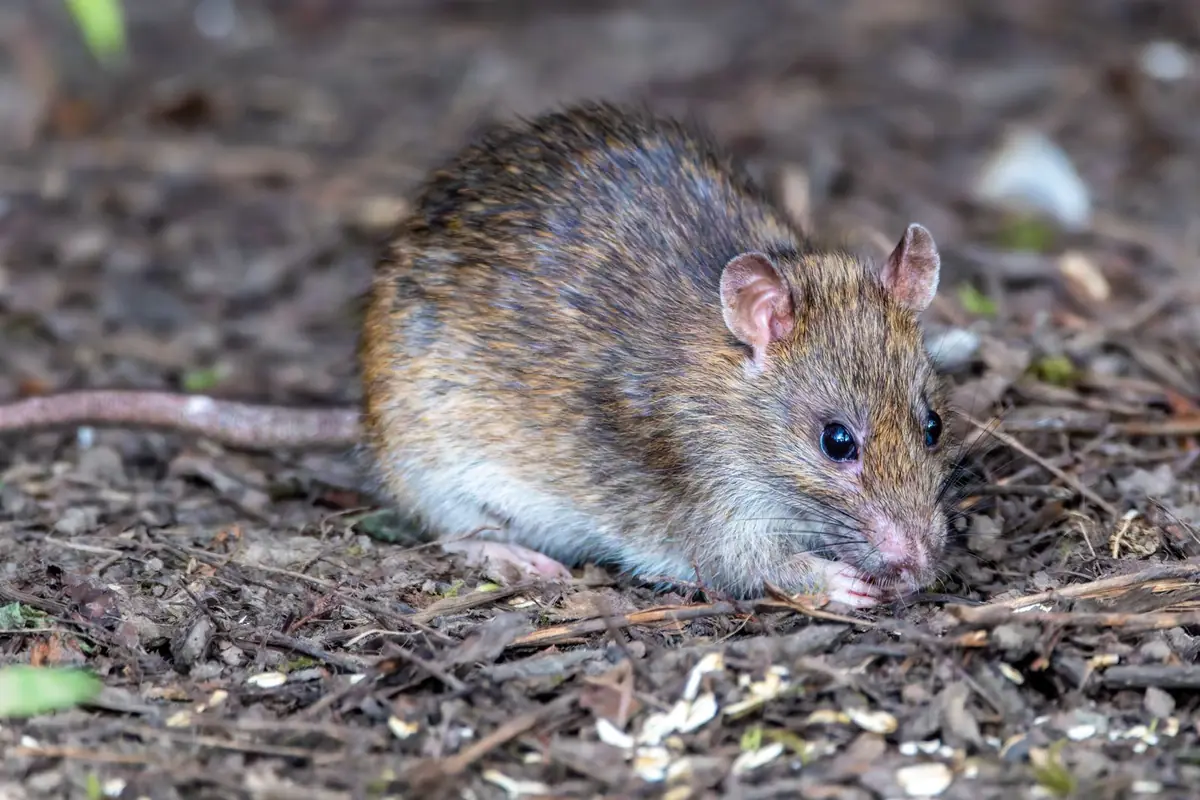
Why roof rats, and why the attic
Roof rats are the most common rat in Florida, and they live up rather than down. They nest in palm skirts, dense hedges and attics, and travel along fence tops, branches and utility lines. St. Pete gives them everything they want: mature oaks touching rooflines, fruit trees in back yards, and older houses with roof vents and soffits that have shifted over the decades. The usual first sign is scratching overhead at night, followed by droppings in the attic or the garage and chewed fruit in the yard.
Norway rats, the burrowing kind, show up around seawalls, docks and commercial buildings, and house mice get into garages and kitchens. The approach is the same for all three: find out how they get in, remove the ones inside, and close the way in.
The three parts of the job
- 01Inspection. The technician walks the roofline from the ground and the attic from the inside, looking for rub marks, droppings, chewed wiring and daylight. Every gap a rat can use is noted on a list you get to see.
- 02Trapping and removal. Snap traps set in the attic along the runs the rats use, checked on scheduled visits until the catches stop. Poison bait inside the house is avoided, because a rat that dies in a wall smells for weeks.
- 03Exclusion. Gaps are sealed with materials rats cannot chew: galvanized hardware cloth, metal flashing, screened vent covers and sheet metal at the roof returns. Expanding foam on its own is not exclusion; rats go straight through it.
Where rats get into St. Pete houses
A roof rat can fit through a gap about the width of a thumb, so the list is usually longer than people expect. The common ones on houses here are the roof returns where the fascia meets the shingles or tile, gable and soffit vents with torn screens, the chase where the AC line set enters the house, gaps around plumbing vents on the roof, and the corners of garage doors where the seal has worn. On tile roofs, the open ends of barrel tiles at the eaves are a favourite and need bird-stops or mesh.
Trimming branches back at least six feet from the roof and clearing palm skirts near the house takes away the highways. It is worth doing whether or not you hire anyone.
After the rats are out
Once the catches stop and the house is sealed, the attic may need cleaning. Droppings, nesting material and urine-soaked insulation carry odor and disease risk. Small amounts can be bagged and sanitized; heavy contamination usually means removing and replacing the insulation in the affected area, which is priced separately so it does not hide inside the rodent quote.
What rodent control costs
| Service | Estimated price | What changes it |
|---|---|---|
| Rodent inspection | Up to $150 | Often credited toward the work |
| Trapping program (2–4 visits) | $275–$600 | Number of visits until catches stop |
| Exclusion: sealing entry points | $400–$1,500 | Count of gaps; tile roofs and two-story homes cost more |
| Attic sanitizing / insulation | Quoted after inspection | Area contaminated |
Rodent work is priced on the size of the house and how many entry points need sealing, so treat these as estimates. You see the full list of gaps and the price for closing them before any exclusion work starts.
Rodents often show up alongside other pests that like the same damp, sheltered spots. See everything else we treat or the full price guide.
Last updated October 8, 2026